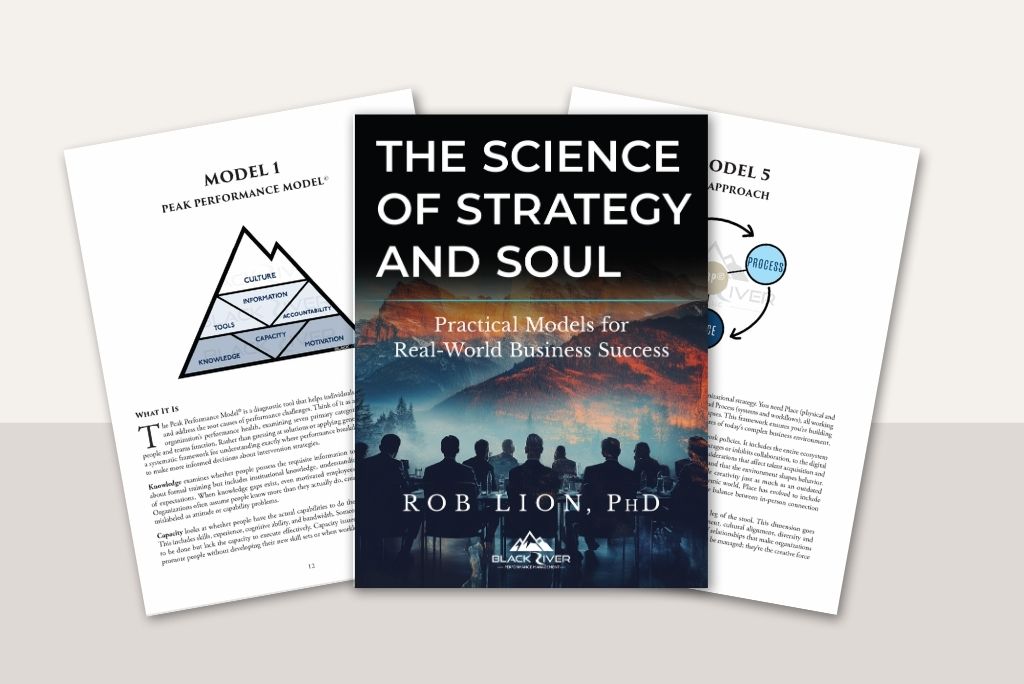

I just finished writing a blog. Then I went to the pub.
I was traveling for clients, unwinding after a full day, and stumbled (pre-cocktail) into an open mic night. People were up there doing their thing, some polished, some raw, all of it real. The room was alive. Strangers were laughing, leaning in, embracing the moment. And I sat there watching, genuinely smiling, taking it all in.
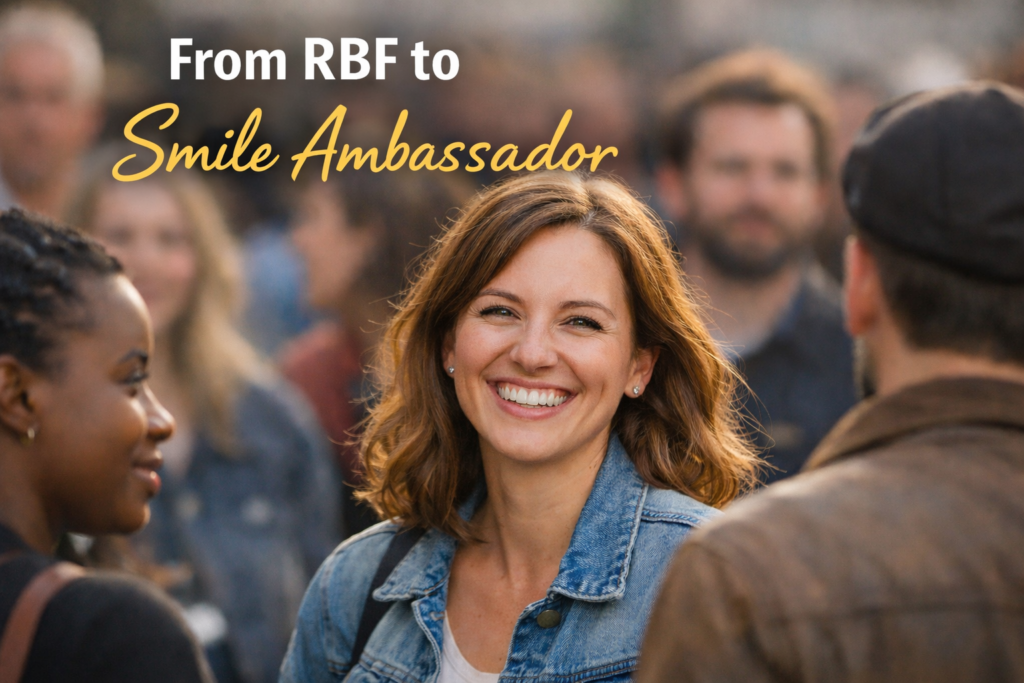
That kind of thing happens to me more than you might expect now. An elderly woman in a grocery store once stopped mid-aisle to ask why I was smiling. Another in a coffee shop said it made her day just to see someone looking that genuinely pleased. They were always smiling by the time they walked away. Small moments, but they add up. And every time it happens, I think about how foreign that version of me would have seemed to anyone who knew me years ago.
For most of my life, my default expression told a very different story. Cold. Stoic. Unreadable. My warm heart was apparently well hidden behind a face that communicated the opposite.
The moment I truly understood this came during a student leadership retreat I was facilitating. It was a cohort-style experience, intimate, deep, the kind of setting where people actually open up. At some point, a student told me she was so relieved to finally get to know me better. She said she saw me regularly on campus and had always assumed I was unapproachable. She was describing what many now call RBF, resting b!tch face. And she was describing me.
I was not mad. But I was viewed as unapproachable. I just had no idea what my face was doing when I was not paying attention to it.
Here is the thing most people never consider. When you brush your teeth in the morning, check your hair, or fix your makeup, you are intentionally presenting yourself. You are looking your best because you are actively looking. But that is not the face you wear on autopilot in the world. That version, the one that shows up in the grocery store, the hallway, the meeting, most of us never see it. And too few of the people close to us care enough, or feel safe enough, to tell us.
What I have learned through years of research and working with thousands of people is that certain personality dimensions lend themselves to RBF more frequently than others. For many people, it is not a badge of honor or a deliberate choice. It is simply an oversight. An unexamined default. The face they make when they are not making a face.
There is a concept in psychology called the Duchenne smile. Named after French neurologist Guillaume Duchenne, it refers to a genuine smile, one that engages not just the muscles around the mouth but the muscles around the eyes. It is the difference between a smile you perform and one that actually escapes you. Research consistently shows that the Duchenne smile is not only more authentic, it is contagious. People respond to it differently. It signals safety, warmth, and presence in ways that a polite, performative smile simply does not.
Here is what I have observed: most people are not smiling. Walk through an airport, a grocery store, a hotel lobby, or a city street and just look around. The number of people who appear disengaged, closed off, or visibly miserable is striking. Over the years I have made a point of raising this awareness with our boys. We have noticed people glaring at us in passing, and more often than not it had nothing to do with us and everything to do with where they were in that moment. So we made a little joke of it in our house: don’t glare, just stare. It sounds lighthearted, but the lesson underneath it is serious. Your face communicates something to the world whether you intend it to or not.
The same is true for leaders. Your expression is not neutral. It lands on your team, your clients, and the people you pass in the hallway. Your open door policy may not feel very open if your face says otherwise. Emotion contagion is real. The energy you carry into a room does not stay contained to you. People pick it up. They adjust to it. They perform to it.
So here is the development challenge: start smiling more. Not a performed, teeth-first, camera-ready smile. A real one. Here is how you know the difference. A genuine smile, what Duchenne identified, activates two things simultaneously. The corners of your mouth lift, and the muscles around your eyes engage. You feel a slight tightening at the outer corners of your cheeks, just below and beside your eyes. That is the tell. That is what people respond to. A smile that stops at your mouth is readable as performative within seconds. A smile that reaches your eyes is not something you can easily fake, and most people feel it before they consciously register it.
You can actually practice this. Not in a contrived way, but by finding something genuine to connect to before you walk into a room, pass someone in a hallway, or greet a stranger. Curiosity works. Warmth works. The simple decision to be present with whoever is in front of you works. Say hi to people when you walk past them. It does not matter which city you are in. See what happens when someone feels seen.
Most people are so accustomed to being invisible in public that a genuine smile and a simple greeting can visibly shift their entire demeanor. It costs you nothing. The return, for both of you, is disproportionate.
I am not a naturally effusive person. My baseline is still closer to stoic than social. But I have learned that warmth is a skill, not just a trait. And like most skills worth developing, it starts with awareness, requires intention, and compounds over time.
The biology is worth understanding. When you smile genuinely, your brain releases a cocktail of feel-good neurotransmitters: dopamine, serotonin, and endorphins. Your stress response quiets. Your heart rate settles. And here is what makes it remarkable: the person receiving your smile experiences a version of the same response. Mirror neurons in the brain activate when we observe someone else’s expression, triggering a subtle but real physiological shift in the observer. You are not just communicating warmth. You are transferring it. Biologically.
Want the most honest test of whether your smile is landing? Try it on a child you do not know. Children have not yet learned to be polite about it. At first they are guarded, uncertain, sizing you up. But a genuine smile, one that reaches your eyes, one that carries no agenda, will warm them. You can watch it happen in real time. Their expression shifts, their body softens, and more often than not they smile back. Children do not respond to performance. They respond to presence. And if you can earn a smile from a child who does not know you, you are doing something right.
That is not a small thing. In a world where most people move through their day feeling unseen, a genuine smile is one of the simplest and most underutilized tools any leader, or any human, has access to.
The elderly ladies asking me why I am smiling so much, followed by their smile back, are proof enough for me.